With decades of experience in the construction industry, PUTEVI AD Užice has established strong expertise in the field of bridge engineering. Our team of engineers, designers, and construction specialists transforms complex engineering challenges into opportunities for innovation and high-quality results. By following the latest technologies and international standards, we are committed to building safe, durable, and functional bridges that connect not only riverbanks, but also people, regions, and communities. Throughout its long history, PUTEVI AD Užice has successfully completed bridges of various structural systems and construction technologies.
Incremental Launching Method (Bridge Launching)
The incremental launching method is a construction technique in which the bridge superstructure is pushed into its final position using mechanical forces, typically hydraulic jacks:
- Foundation construction – execution of foundations and substructure elements to support the bridge.
- Construction of supporting structures: – piers or guiding structures are placed along the launching path. These structures provide guidance and support during the process.
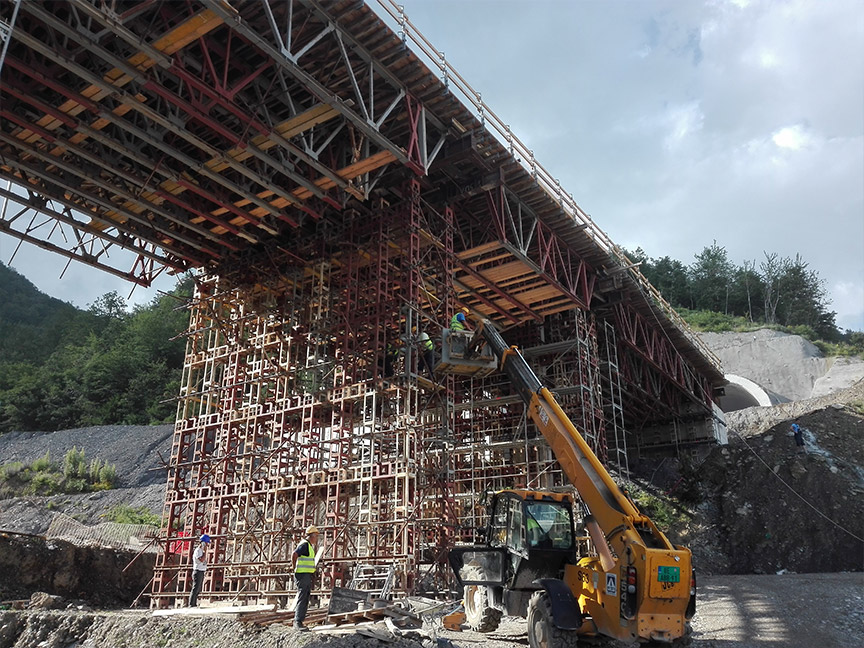
- Superstructure assembly – the bridge structure is assembled on temporary supports behind the abutment.
- Bridge launching – the structure is gradually pushed forward along the supporting structures to its final position using hydraulic equipment.
- Final positioning – Once the bridge reaches its designated location, additional works are carried out to ensure stability and safety.
Engineers carefully plan and execute these steps to ensure precise and safe placement of the bridge.
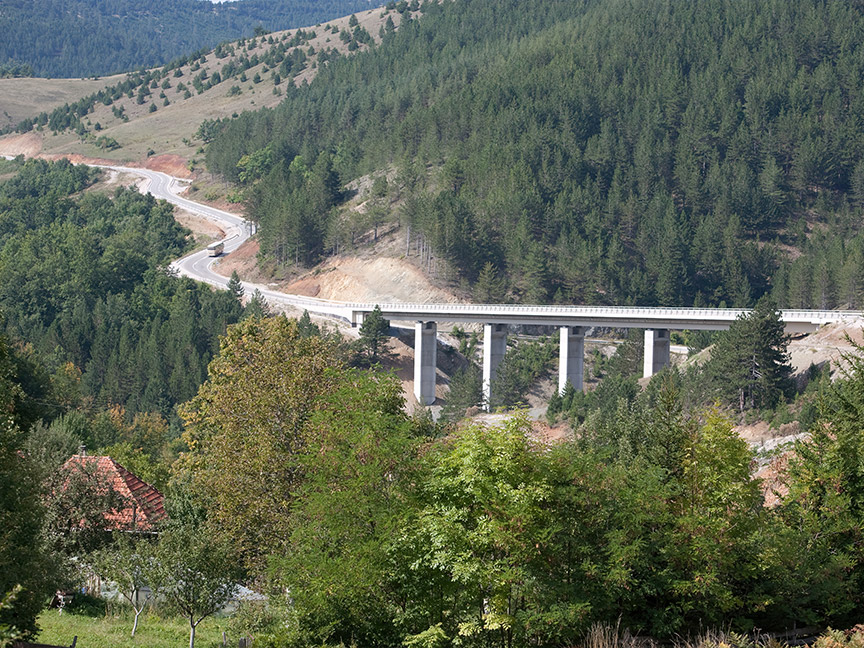
PUTEVI AD Užice performed the first bridge launching operation in Serbia in 2006, on Bridge No. 2 on the Borova Glava – Uvac section of the M-21 main road, using the incremental launching method.
Girder Bridges
Girder bridge systems are those in which the span structure is separated from the piers by bearings.
The widespread use of this system began with the application of prestressed reinforced concrete and prefabricated construction. While this enabled faster construction, it also led to reduced load-bearing capacity and durability of some constructed bridges, as well as significant costs for rehabilitation.
The main characteristic of girder systems is the separation of the superstructure from the piers, with loads transferred to the piers through bearings.
From a structural perspective, girder bridges can be classified as:
- Statically determinate systems (simple beams)
- Statically indeterminate systems (continuous beams)
Girder systems are suitable for all materials except stone, including timber, reinforced and prestressed concrete, and steel, with or without composite action.
Steel Bridges
Steel structures offer several advantages compared to concrete bridges:
- large span capability
- low structural weight
- fast and efficient erection
- flexibility
- reduced foundation (piling) costs
- easier rehabilitation after damage
- long service life
The main disadvantage is susceptibility to corrosion, which requires regular maintenance.
Advanced construction methods allow steel and concrete to act compositely within a single cross-section, allowing spans of up to 50 m and extensive use in bridge construction.
Used as an independent structure, steel is particularly common in pedestrian, industrial, and and multi-purpose bridges.
Balanced cantilever construction
The balanced cantilever method is used for viaducts and bridges with three or more large spans, typically ranging from 70 m to 250 m. This technology allows construction over deep valleys, rivers, and inaccessible terrain without the need for extensive falsework.
The top of each completed pier is cast with the base section (pier table), forming its foundation. Movable steel cages are mounted at the ends of the base section to allow step-by-step concreting, reinforcement, and prestressing of segments about 5 m in length, applied symmetrically on both sides of the pier table.
Construction proceeds at a moderate pace, with roughly one pair of 2 × 5 m segments completed per week. For longer bridges, employing four reinforcement cages enables progress of up to 80 m per month.
This method is widely used for continuous bridges with varying spans and longitudinal gradients.
Frame Bridge Systems
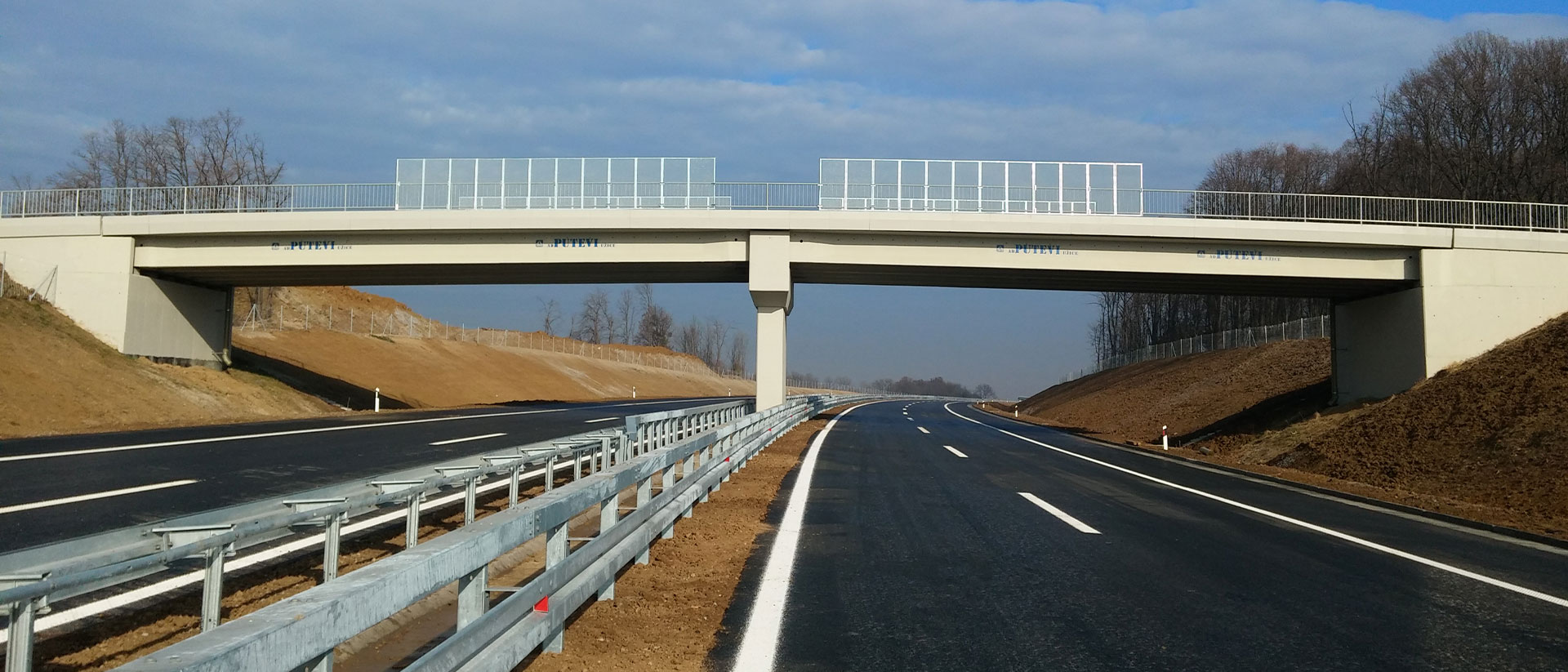
Frame bridge systems are formed when the span structure is rigidly, or via joints, connected to the piers, creating a single load-bearing structure with varying cross-sections.
Frame structures can be:
- Single-span, with or without joints, for spans ranging from 5 to 50 m, constructed from reinforced concrete, prestressed concrete, or as composite structures.
- Multi-span, with two, three, or more spans, which are commonly used in modern bridge construction.
The use of tendons and inclined piers in frame systems allows for longer spans and the combination of monolithic and prefabricated construction methods.
These bridge systems are designed with no or minimal bearings and expansion joints, eliminating major stress points and common causes of damage, thereby reducing maintenance costs.
Frame bridge structures are more robust, providing systematic reserves for load redistribution and structural effects, which enhances durability and safety under varying loads.